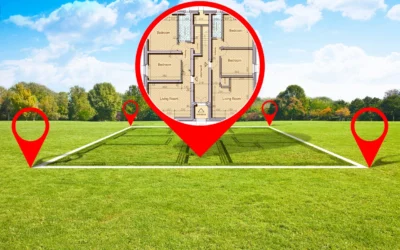
Two recent decisions from the Michigan Court of Appeals reinforce that statutory deadlines matter and that short-term rentals are considered commercial uses. Please note the outcome in any particular community will still depend on the language of its own governing...

Common Elements
Sharing the Pavement: Addressing E-Bike Use in Planned Communities
The use of electrical bicycles has significantly increased at a pace not likely anticipated by community association boards. A board that has never addressed a complaint about bicycle use now hears about riders speeding down the entrance drive and a near miss on the...
Michigan Court Extends Condominium Association Liability to Short-Term Rental Guests
What community associations and managers need to know about Letvin v. Village at Grand Traverse Commons Condominium Association In July 2026, the Michigan Court of Appeals issued a published decision in Letvin v. Village at Grand Traverse Commons Condominium...
Taking Charge: Navigating the Transition from Developer to Co-Owner Control
The transition from developer control to a co‑owner–run board is one of the most important moments in a condominium’s life cycle. It marks independence for the community, but it also brings real risk if the process is rushed or treated merely as a formality....
Encroachments onto General Common Elements: What Boards Need to Know
It is not uncommon for a condominium board to discover, years after the fact, that a co‑owner addition exists on the general common elements. This type of extension is commonly referred to as an encroachment, meaning a situation in which a co‑owner constructs or...
Victory in Michigan Court of Appeals on Reversion to Common Elements
MAGWV proudly represented Fenton Orchards Condominium Association, the prevailing party, in a Michigan Court of Appeals decision affirming the trial court’s ruling in the Association’s favor. The Court’s opinion considered the pre-2016 version of Section 67 of the...
What Every Board Member Should Consider to Reduce Assessments
A condominium association’s board of directors has a seemingly endless list of responsibilities, but one of the most important – at least in terms of its impact on the membership – is the adoption of an annual budget. In simple terms, adopting a budget requires the...
Webinar – The Michigan Homeowners’ Energy Policy Act
The Michigan Homeowners' Energy Policy Act: What Board Members and Managers Need to Know If you are a board member or manager of a Michigan community association, you need to know how to comply with the Homeowners' Energy Policy Act, which becomes effective April 2,...
Rules Your Community Association Should Consider Adopting
Does our Board have rulemaking authority? In Michigan, a condominium association Board has the implicit authority to enact reasonable rules and regulations regarding the condominium. Generally speaking, this authority is quite broad and unless otherwise specified in...
Do You Have a Responsibility Matrix And Is It Up To Date?
Boards and managers are always looking for ways to make the administration of their condominiums more efficient. Having to sort through the Master Deed (and multiple amendments too!) to figure out whether the association or co-owner is responsible for a certain common...
Preventing Mold and Water Damage in Your Condominium Association: Proactive Steps for Managers and Boards
From frozen pipes, broken appliance supply lines, to roof leaks and leaking drain pans, in townhome and attached condominiums, these and other sources of water intrusion can quickly wreak havoc for owners and the association if not handled properly and quickly....
The Financial Risks of Ignoring Mold in Your Condominium
Mold can present a real threat to the structural integrity of a building and can also be harmful to human health. This threat is amplified in attached condominiums since owners can be affected by an instance of mold originating in another co-owner's unit or the common...